Santo Domingo is the oldest continuously inhabited European settlement in the Americas. It's also where you'll find the best avocado popsicle in the Zona Colonial, a fortress that's actually worth hiring a guide for, and plazas that are quiet on weekday mornings and packed on Sunday nights.
Our team is based in Santo Domingo. We eat at these restaurants, walk these streets, and know the city beyond the Colonial Zone. This guide covers what we'd tell a friend visiting for the first time.
Getting here: If you're flying into Las Américas International Airport (SDQ), plan for about 30 minutes to get to the Zona Colonial after clearing customs. For a full breakdown of what to expect at the airport, immigration tips, and getting around the DR, read our Dominican Republic Travel Guide
The Zona Colonial and Beyond
Santo Domingo's Colonial Zone is compact enough to explore on foot in a day. The walled quarter sits along the western bank of the Ozama River, and most of the historic sites cluster within a few blocks of each other. It's a UNESCO World Heritage Site, and old colonial buildings have been converted into coffee shops, restaurants, galleries, and community arts spaces. The plazas fill up at night with music and cultural events.
Historic Sites Worth Your Time
Fortaleza Ozama
Google Maps
The oldest European-built military structure in the Americas, this fortress overlooks the Ozama River at the edge of the Zona Colonial. The grounds are open Tuesday through Sunday, 10 a.m. to 9 p.m. (closed Mondays). You can walk the grounds alone, but this is one spot where we recommend hiring a guide on-site. The tower, ramparts, and recently added multimedia displays cover history that's easy to miss on your own, and the views of the port and skyline from the top are worth the climb.
Alcázar de Colón
Google Maps
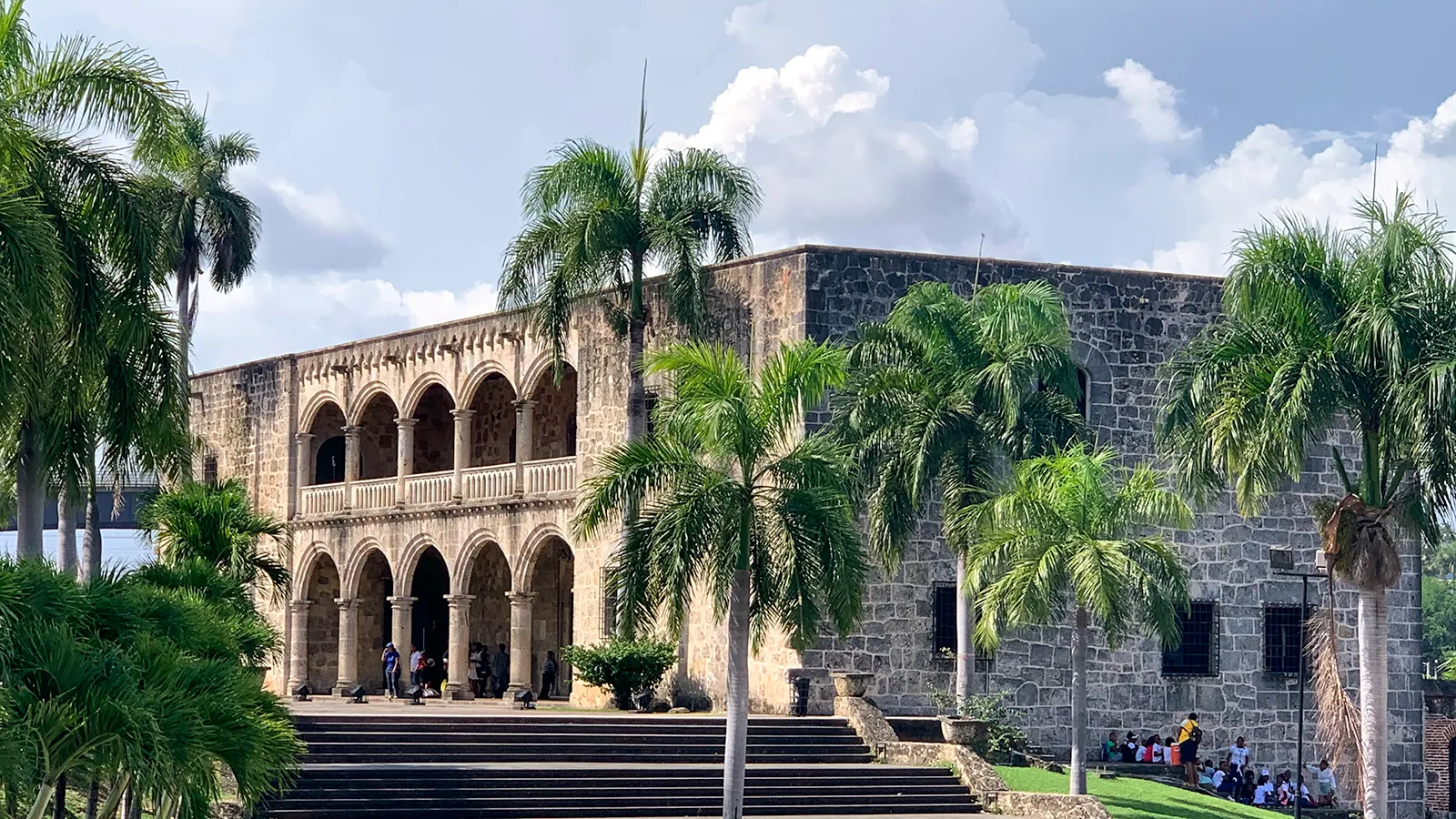
Built for Christopher Columbus's son Diego and his family, this palace sits at the head of Plaza España with views stretching across the river. The interior houses a well-preserved collection of period furniture and artifacts, and the audio tour (available in multiple languages, roughly $2 per person) is worth the time. Open Tuesday through Sunday, 10 a.m. to 6 p.m. Budget about 45 minutes for the full visit.
Catedral Primada de las Américas
Google Maps
The first cathedral built in the Americas, dating to 1512. The architecture blends Gothic and Renaissance styles, and the interior holds a significant collection of religious woodcarvings and artifacts. Open daily; Sundays are limited to midday and late afternoon for worship services. It anchors the south end of Parque Colón, making it an easy stop on any walk through the Colonial Zone. Note: if you're wearing sleeveless tops or shorts, they'll provide a covering at the entrance.
Ruinas del Monasterio de San Francisco
Google Maps
This 16th-century monastery was ordered by Frey Nicolás de Ovando, destroyed by an earthquake in the 1700s, and now stands as protected ruins. You can't go inside, but the exterior is worth walking around. On Sundays, the ruins host live music concerts with traditional tropical music.
Cultural Experiences
Kahkow Experience
Google Maps
The Dominican Republic is one of the world's top organic cacao exporters, and the Kahkow Experience on Calle Las Damas covers the process from bean to bar without leaving the city. The hands-on chocolate bar-making experience runs about $10 per person and takes around 30 minutes. The adjoining cafe serves excellent hot chocolate and ice cream. It's directly across from Fortaleza Ozama, so it's easy to pair the two in a single morning.
Galería Bolós
Google Maps
The owner transforms reclaimed wood from the Colonial Zone's historic buildings into furniture, art, and souvenirs. The gallery also showcases work from other Dominican and Haitian artists. It's on Calle Isabel La Católica, open daily 10 a.m. to 7 p.m., and the prices are reasonable. A good alternative to the souvenir shops on Calle del Conde.
Museo de la Música Dominicana
Google Maps
The history and evolution of Dominican music, from its African and Spanish roots to the merengue, bachata, and son that define the country's cultural identity today. Small and focused. If you're visiting on a weekend evening, ask about live performances at the San Francisco Ruins, where Grupo Bonyé plays energetic sets of traditional merengue, son, and salsa.
Parks and Plazas
Parque Colón
Google Maps
The central plaza of the Zona Colonial, alongside the cathedral. Musicians, vendors, and kids fill the space under massive old trees, and the surrounding restaurants and cafes have good people-watching. Open 24 hours.
Plaza España
Google Maps
A large, open plaza at the edge of the Zona Colonial, flanked by the Alcázar de Colón and a row of restaurants. Festivals and cultural events pop up regularly on weekends.
Calle del Conde
The main pedestrian street through the Zona Colonial, lined with shops, kiosks, and cafes. Good for picking up souvenirs and Dominican coffee. There's also a Supermercados Nacional if you need to stock up on supplies. Be aware: prices at the tourist shops vary wildly, so if something seems expensive, check the shop next door.
Where to Eat and Drink
Santo Domingo's food scene ranges from traditional Dominican cooking to creative fusion, with a strong cafe culture in between. These are the places our team goes back to.
Restaurants
Jalao
Google Maps
Dominican food in a setting that's loud, fun, and unapologetically extra. Right on the main square, with outdoor seating under a big tree overlooking the park. The sancocho and mofongo are solid picks, and on Saturday nights a professional band keeps the whole place dancing. Closed Mondays.
Buche Perico
Google Maps
Dominican food served in a gorgeous indoor garden setting with a waterfall and the oldest bread oven in the city. Excellent for small plates and sharing. The tuna tataki and passion salad come up often as favorites. Make a reservation, as it fills up quickly.
Leandro Diaz y su Casa Gastronómica
Google Maps
Casual and deeply Dominican, with a menu of traditional dishes and creative takes on local flavors. Only a few tables, good music. The Barrigón de Leandro (pork) and the quequitos de chivo (goat taquitos) are standouts. Chef Leandro sometimes comes out to say hello.
Maison Kreyol
Google Maps
Haitian food that's consistently excellent, with standout griot (pork), fish, and seafood options. Santo Domingo's proximity to Haiti shows up in the food, and Maison Kreyol is one of the better places to try it. The space is clean, intimate, and plays Haitian music. Closed Tuesdays. Worth noting: this is outside the Zona Colonial in Gazcue, about a 10-minute ride.
Time Creative Vegetarian Kitchen
Google Maps
Upscale vegetarian food with creative cocktails. The cauliflower in mole and the smoked mushroom dishes draw repeat visitors. Outdoor seating in the Colonial Zone.
Cafes and Sweet Spots
Cafetería El Conde
Google Maps
Right on Parque Colón, packed with locals and tourists sipping coffee and watching the park. The food is straightforward and solid, and the service is friendly. Open daily from 7:30 a.m.
Casa Barista & Co.
Google Maps
A local specialty coffee shop with beans sourced from five Dominican fincas. Excellent breakfast menu, air-conditioned interior, Wi-Fi, and plenty of seating. Open daily from 7 a.m. If you have dietary restrictions, the menu is well-marked for common allergens.
Paletas Bajo Cero
Google Maps
This one is a team favorite. We recommend avocado with condensed milk or coconut-coffee. There are a few locations around the city, so you'll likely stumble across one. Air-conditioned inside. Popsicles run 220 to 290 pesos ($4 to $5) depending on fillings and toppings.
Beyond the Colonial Zone
Most visitors stay in the Zona Colonial, and that's understandable. But Santo Domingo is a city of nearly three million people, and there's plenty worth seeing outside the old walls.
Los Tres Ojos National Park
Google Maps
A network of underground caves and limestone caverns on the eastern edge of the city. Three iridescent freshwater lagoons sit below ground level, connected by walkways through impressive stalagmite and stalactite formations. A guided boat ride across one of the caves gives you a different view of the rock formations from the water. Admission is 200 pesos (about $3.50) per adult. Wear proper shoes, as the steps can be steep and slippery from the humidity. Try to arrive early in the morning for the best light on the first lagoon. Our East Coast Adventure itinerary stops here on the way from Santo Domingo to Bayahibe. See the East Coast Adventure itinerary
Jardín Botánico Nacional
Google Maps
More than 400 acres of tropical plant life, themed gardens (including a Japanese garden), and a small train that loops the grounds. Open daily 9 a.m. to 5 p.m. The butterfly garden is a highlight. Admission is approximately $2.50 to $5 depending on whether you add the train and museum.
The Malecón
Santo Domingo's waterfront promenade stretches for miles along the Caribbean coast. Street vendors, music, and locals out for a walk fill the Malecón in the evenings, especially on weekends. During Carnival season (late February to early March), the Malecón becomes the center of celebrations with parades, masks, and music.
Cofradía de los Congos del Espíritu Santo
In the neighborhood of Villa Mella, about 20 minutes north of the Colonial Zone, this Afro-Caribbean brotherhood practices traditional music, dance, and festivities with conga drums. Their traditions are recognized by UNESCO as Intangible Cultural Heritage. Visiting requires coordination with the community and local knowledge of schedules. Offbeat can arrange: If this is something you'd like to experience, our team can help coordinate a visit. Start planning your trip
Day Trips From Santo Domingo
Santo Domingo's central location makes it a natural base for exploring the surrounding regions. These are trips our team builds into itineraries regularly.
San Pedro de Macoris (45 minutes east)
One of the first settlements on the island and the birthplace of the Dominican sugar industry. Visit the local museum to learn about the cocolos, African-descended immigrants from British Caribbean islands who came to work in the cane fields and left a lasting cultural imprint on the country. Stop by Rincón Cocolo, the only restaurant in the country serving traditional cocolo cuisine. Offbeat can arrange: Our team can coordinate a visit to the sugar cane fields, where cane is still harvested by hand with a machete — one of the few places in the world where this practice continues.
Juan Dolio (30 minutes east)
A beach town with calm Caribbean water, good for a half-day escape from the city. Several of our itineraries use Juan Dolio as a beach stop between Santo Domingo and points east. Read our Juan Dolio guide for restaurant and activity recommendations
Bayahibe (2 hours east)
A fishing town on the southeastern coast, and the launch point for boat trips to Isla Saona and snorkeling at Playa Magallanes. National Park Cotubanamá is nearby with cenotes, jungle hikes, and cave systems. Read our Bayahibe guide for the full breakdown
Practical Tips
When to visit
December through March offers the most comfortable weather, with temperatures around 28°C (82°F) and minimal rain. Hotel rates spike around Christmas and Carnival. April is a sweet spot with fewer crowds and great weather. The summer months are hot and humid, but the Festival de Merengue (late July to early August) brings stages to the Malecón.
Getting around
The Zona Colonial is walkable. For trips outside the old city, Uber is reliable and affordable. The OMSA public buses cover major routes for a minimal fare but stop running in the evening.
Safety
Santo Domingo is a major capital city, and the same common-sense precautions apply here as in any large city. Stick to well-lit areas at night, don't flash expensive jewelry or electronics, and use ride-hailing apps rather than flagging down unmarked taxis. The Zona Colonial is generally safe for walking during the day and well into the evening. Learn more about how we approach safety across all our programs
Language
Spanish is the primary language. English is spoken at most hotels and some restaurants in the Colonial Zone, but outside tourist areas, basic Spanish goes a long way. Our team is bilingual and can help navigate any language barriers during your trip.
Tipping
10% is customary at restaurants and is often already included in the bill (look for "propina" or "servicio"). A small tip for guides at historic sites is appreciated.
Make Santo Domingo Part of Your Trip
Whether you're spending a few days in the capital before heading to the coast, or building Santo Domingo into a longer trip across the Dominican Republic, our team can help you build a custom trip around what you want to see.
Explore our Dominican Republic destination page for a full overview of what's possible
See our East Coast Adventure itinerary — Santo Domingo to Bayahibe and Punta Cana
See our Mountains to Whales itinerary — from the Dominican highlands to humpback whale season in Samaná
Ready to start planning? Tell us what you're looking for