Our team handles arrivals in the Dominican Republic every week. We've met hundreds of travelers at the airport, walked them through the e-ticket system, and answered every question from "do I need a visa?" to "is the tap water safe?" This guide covers what you need to know before you land.
Before You Leave Home
Documents and Entry Requirements
Passport: Required for all visitors. Must be valid for the duration of your stay. Citizens of EU countries, Canada, the U.S., U.K., and several other nations can enter with a passport valid through their departure date. For non-tourism visits or longer stays, six months of validity is standard. Check the Dominican Republic Tourism Board's entry requirements page for your specific nationality
Visa: Most visitors from the U.S., Canada, the U.K., the European Union, Mexico, and many South American and Central American countries do not need a visa for stays of 30 days or less. If you plan to stay longer, you'll need to request an extension through the Migration Department in Santo Domingo, or pay a fee upon departure (the fee scales with the length of your overstay).
E-Ticket: Mandatory for every traveler entering or leaving the Dominican Republic, including Dominican citizens. The e-ticket is a free digital form that replaced the old paper immigration and customs forms in 2021. It combines your immigration declaration, customs declaration, and health information into a single online submission.
You'll need to complete the form twice for a round trip: once for entry and once for departure. Each submission generates a QR code. Here's what to know:
- Complete the form at eticket.migracion.gob.do before your flight. It's free. If a website asks for payment, you're on a scam site.
- Have your passport number, flight details (airline and booking code), and accommodation address ready before you start.
- Screenshot or save your QR codes. Printing a backup is a good idea in case of phone battery or Wi-Fi issues.
- Airlines may check for a valid e-ticket QR code at check-in. Without one, you could be delayed or denied boarding.
- Families traveling together can include up to seven people on a single form, which generates one shared QR code.
Departure tax: $20, already included in your airline ticket. You don't need to pay anything extra at the airport.
What to Pack
The Dominican Republic is warm year-round, but what you pack depends on where you're going. The coast is hot and humid. The mountains around Jarabacoa can be surprisingly cool, especially at night.
Essentials:
- Reef-safe sunscreen (regular sunscreen damages coral reefs)
- Insect repellent, especially for evenings and rural areas
- A reusable water bottle, ideally with a built-in filter
- Comfortable walking shoes for cobblestone streets and trails
- A light layer or long-sleeved shirt if you're heading into the mountains
- A day bag for excursions
Often overlooked:
- A small host gift if you're staying with a family or visiting a community (something from home, a magnet from a recent trip, or local treats go a long way)
- A headlamp for rural areas or shared accommodations
- A deck of cards or a small game for downtime and breaking the ice
- Cash in small denominations for tips, colmados, and street vendors
For a deeper dive on packing, read our 10 essential packing items for your next adventure
Health
Vaccinations: No special vaccinations are required for most travelers. However, visitors arriving from certain Brazilian states must show proof of yellow fever vaccination. Consult your doctor at least a month before travel.
Water: Do not drink the tap water. Stick to bottled or filtered water. Our team stocks potable water for all our travelers, and most hotels and restaurants serve bottled water by default.
Medical care: Santo Domingo and Punta Cana have reliable hospital and ambulance services. In smaller towns and rural areas, medical infrastructure is more limited. Travel health insurance with medical evacuation coverage is strongly recommended.
Read about our approach to safety and the support systems we have in place for travelers
Arriving at the Airport
Most international flights land at Las Américas International Airport (SDQ) in Santo Domingo. Some flights, especially from the U.S. East Coast, also land at Punta Cana (PUJ), Puerto Plata (POP), or Santiago (STI). Your destination within the DR determines which airport makes the most sense.
At Immigration
Once you're off the plane, follow the signs to immigration. Have your passport and e-ticket QR code ready. The immigration officer will scan your code and stamp your passport. The process has gotten faster since the e-ticket system was introduced, but lines can still back up during peak hours.
Baggage and Customs
After immigration, follow signs to baggage claim. Customs is generally quick. You're allowed to bring in up to 200 grams of tobacco, up to three liters of alcohol, and gifts valued up to $500.
The Arrivals Hall
Walk through the sliding glass doors into the arrivals hall. If you're traveling with Offbeat Travel, our team will be there waiting for you.
Getting Around the Dominican Republic
From the Airport
SDQ to Santo Domingo (Zona Colonial): About 30 minutes by car. Pre-arranged private transfers are the simplest option. Taxis from the airport are available but negotiate the fare before getting in, or use a ride-hailing app.
SDQ to Juan Dolio: About 30 minutes east.
SDQ to Bayahibe: About two hours east along the coast.
SDQ to Jarabacoa: About three hours north into the mountains.
SDQ to Samaná Peninsula: About five hours northeast, or shorter via domestic flight to El Catey airport.
SDQ to Puerto Plata: About four hours north.
Getting Around Day-to-Day
In Santo Domingo: The Zona Colonial is walkable. For trips outside the old city, Uber works reliably and is affordable.
Between cities: Private transfers or rental cars are the two main options. Roads between major destinations are generally well-maintained, though mountain roads can be winding and rural roads less predictable. Driving is on the right side of the road.
Public transport: OMSA buses cover major routes in Santo Domingo for a minimal fare but stop running in the evening. Guaguas (local buses) connect towns across the country and are inexpensive, but schedules are informal and comfort varies. Caribe Tours and Metro buses run longer intercity routes with more predictable schedules.
Money, Tipping, and Costs
Currency
The Dominican peso (DOP). U.S. dollars are widely accepted at hotels and tourist-oriented businesses, but you'll get better value paying in pesos, and local businesses, markets, and colmados (corner stores) operate in pesos. ATMs are common in cities and tourist areas. Notify your bank before traveling to avoid card blocks.
Tipping
A 10% service charge (propina) is often already included in restaurant bills. Check before adding more. For guides, drivers, and hotel staff, tipping in cash is appreciated and expected.
Costs
The Dominican Republic is generally affordable compared to most Caribbean destinations. A meal at a local restaurant runs $5 to $15. A cold Presidente beer at a colmado is about $2. Tourist-area restaurants and activities are priced higher.
Practical Tips From the Team
Language
Spanish is the primary language. English is spoken at most hotels and tourist-facing businesses in Santo Domingo, Punta Cana, and Puerto Plata. Outside these areas, basic Spanish is helpful. Even a few words of effort in Spanish will be appreciated.
Phones and Connectivity
Most U.S. carriers include the Dominican Republic in international roaming plans, but check before you travel. Wi-Fi is available at hotels and most restaurants. For extended stays, a local SIM card with data is inexpensive and widely available.
Time
The Dominican Republic runs on Atlantic Standard Time (AST), which is UTC-4. No daylight saving time. And culturally, the pace is relaxed. Buses may run late. Concerts may start after the posted time. Things happen when they happen. Lean into it.
Electricity and Power
The Dominican Republic uses 110V at 60Hz, the same standard as the U.S. and Canada. Outlets are the standard Type A (two flat prongs) and Type B (two flat prongs with a ground pin). If you're traveling from the U.S. or Canada, your chargers and devices will work without an adapter. European, U.K., and Australian travelers will need a plug adapter (and should check that their devices support 110V — most modern phone and laptop chargers are dual-voltage, but hair dryers and curling irons often are not).
Power outages are common in the Dominican Republic, especially outside major cities. Most hotels and resorts have backup generators that kick in quickly, so you may notice a brief flicker but rarely a prolonged blackout. In smaller towns and rural areas, outages can last longer. A portable power bank for your phone is worth packing.
Safety
Santo Domingo is a major capital city and the same common-sense precautions apply as in any large city: stay aware of your surroundings, don't flash valuables, use ride-hailing apps at night. Tourist areas are generally well-policed, and the Dominican Republic has a dedicated tourist police force (POLITUR) reachable at 809-222-2026. Learn more about how we approach safety across all our programs
Where to Go From Here
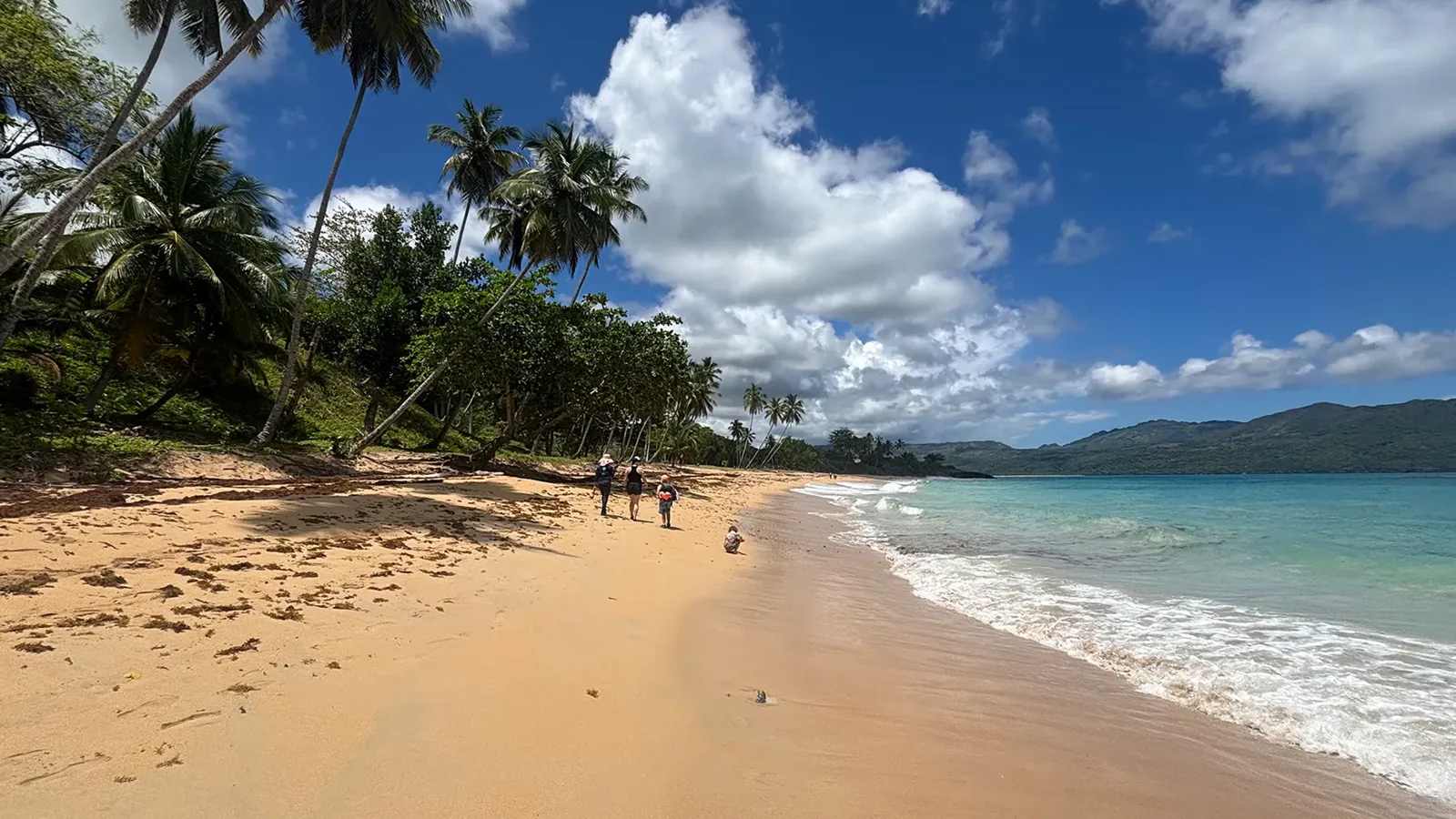
The Dominican Republic covers a lot of ground for a relatively small island. The Colonial Zone in Santo Domingo is one of the most historically significant sites in the Americas. The mountains around Jarabacoa are cool and green, a sharp contrast to the coast. The Samaná Peninsula has beaches that rival anywhere in the Caribbean, and between January and March, humpback whales migrate to the bay to give birth. The southeast coast, from Bayahibe to Punta Cana, offers cave systems, cenotes, coral reef snorkeling, and island hopping.
Explore our Dominican Republic destination page
Read our Santo Domingo guide for restaurant and activity recommendations from our team
Read our Bayahibe guide for beaches, nature, and the southeast coast
Read our Juan Dolio guide
For cultural tips on Dominican life and what to expect, read our Top 5 Essential Tips for Visiting the Dominican Republic
Our team lives in the Dominican Republic and can help you plan a custom trip.
Start planning your custom trip