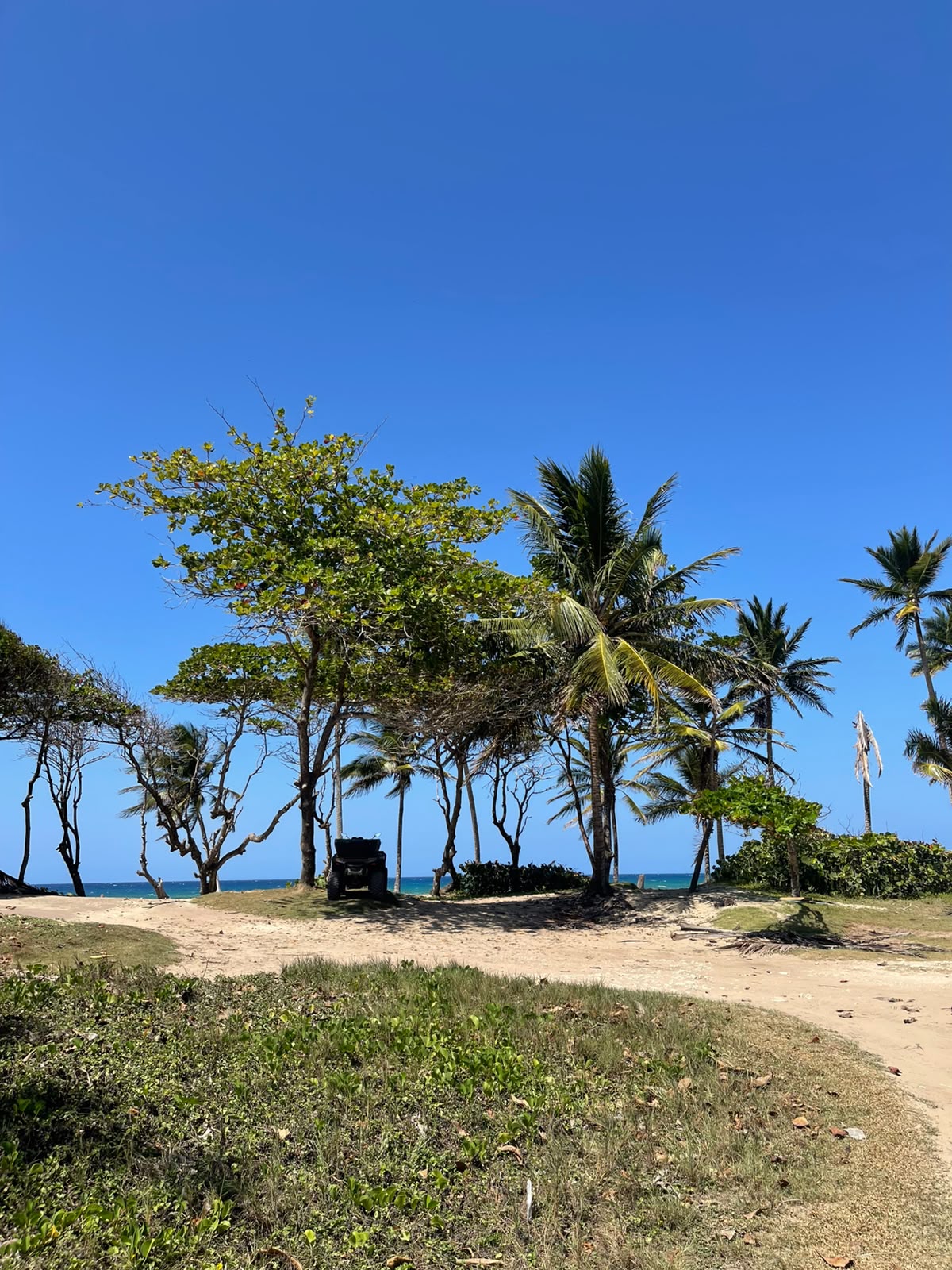
There is a particular kind of darkness on a beach like Playa Camaronal. No lights, no phones, no sounds of cars, nothing but the most beautiful and terrifying wild darkness of nighttime.
At first, your eyes keep trying to fight it. You want to see where you are going. You want to identify every shadow, every sound, every shape moving at the edge of the water. Some of our students even scream, nervously laugh, or cry!
And then, slowly, you stop trying.
Your eyes adjust. The stars get brighter. The celeste blue line of the bioluminescent surf becomes enough to orient yourself. You start noticing the breeze, the different textures of sand beneath your feet, the sound of the waves arriving and retreating beside you.
And you walk. And walk. And walk some more.
During our programs at Refugio Nacional de Vida Silvestre Camaronal in Costa Rica, some of the most memorable conservation work happens while much of the world is asleep.
Sea turtle night walks can last anywhere from two to four hours. Sometimes longer. And one of the first lessons they teach you is that nature is under absolutely no obligation to follow your itinerary.
There may be a turtle.
There may be several turtles.
There may be 20 or more turtles.
There may be tracks leading up the beach that suddenly turn around.
There may be hours of walking, looking, listening and waiting, not a single turtle in sight.
That unpredictability is part of what makes the experience so special- each night unique.
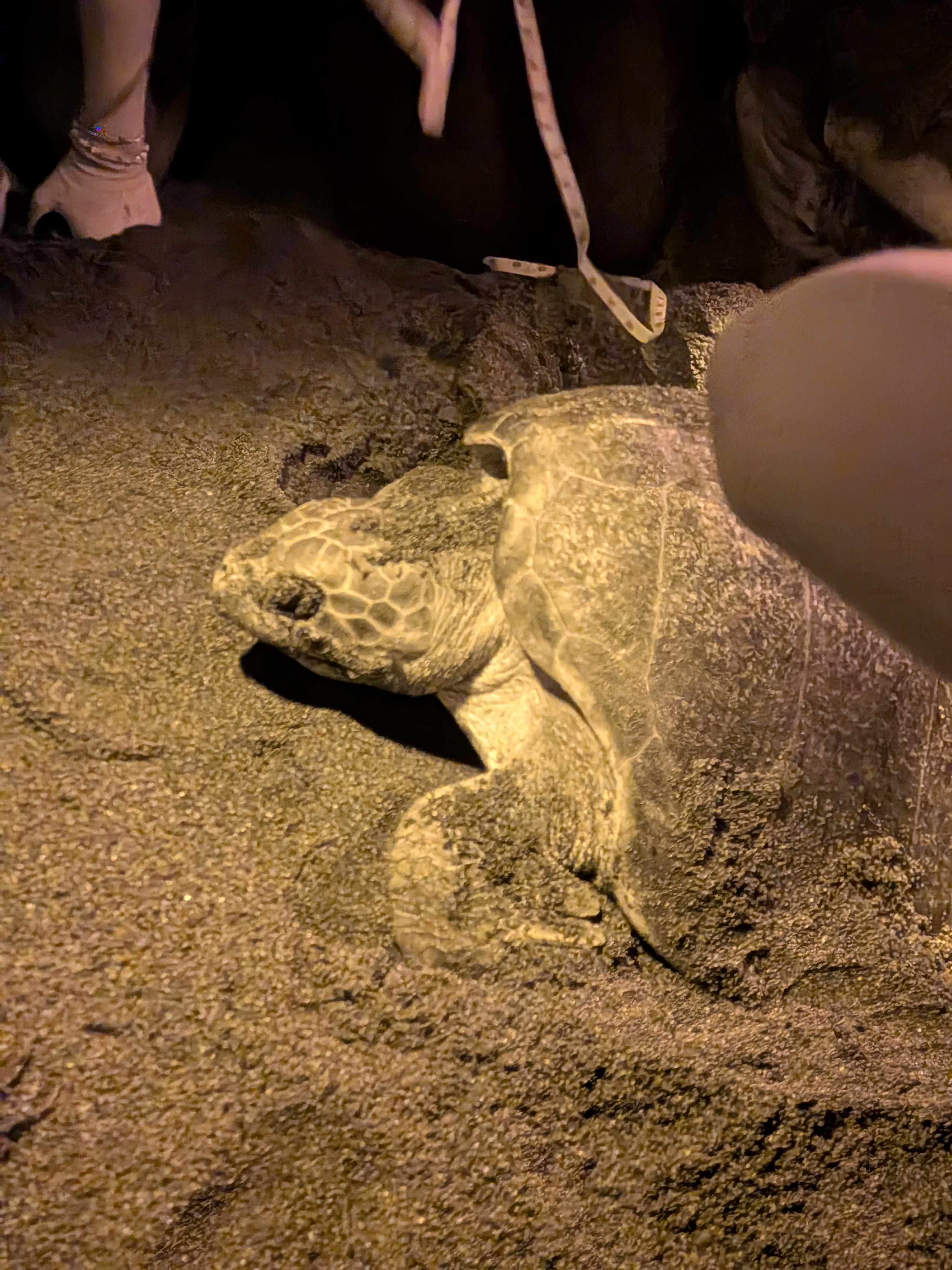
We walk the beach looking for signs of nesting sea turtles and supporting the local conservation team in their work. When we find a mama turtle making her nest, we carefully and silently wait (sometimes 45 minutes!). As she finishes her nest and enters her trance, we approach, and one small group collects her eggs as she lays them, another group takes her measurements and takes note of our location on the beach, and our final group takes the eggs to one of our two hatcheries, replicating a perfect turtle nest, and “transplanting” the nest so we can monitor the eggs until they hatch. The hatchery protects the eggs from natural predators like raccoons, crabs, and of course, human poachers.
For students, this is very different from simply visiting a conservation project.
They are awake in the middle of the night. They are tired. They are sandy. They have to pay attention.
And suddenly, the abstract idea of “sea turtle conservation” becomes very, very real.
A track in the sand means something.
The location of a nest matters.
The tide matters.
The timing matters.
Most importantly, the way we move around an animal matters.
And the people who know this beach — who have spent night after night learning its rhythms — matter enormously.
Sometimes, after walking for what feels like forever, someone spots fresh tracks, and the entire energy of the group changes.
There is excitement, of course, but there is also a need for restraint. A nesting turtle is not there for us. She is in the middle of something ancient, vulnerable and physically exhausting, and our job is to observe and assist the conservation work without becoming the center of the experience.
That distinction is important, and sometimes the most difficult, even for adults with a lot of conservation experience.
Wildlife encounters can easily become about collecting moments: I saw a turtle. I got the photo. I checked the box.
A night walk demands something different of us. It asks us to slow down. It asks us to listen.
Sometimes it asks us to wait.
And sometimes it asks us to accept that after several hours of walking beneath an incredible Costa Rican sky, the turtle simply never arrives.
I actually think there is something beautiful in that, too.
Because conservation is not a performance.
The animals are living their lives whether or not we are lucky enough to witness them. And then there are the nights when something completely unexpected happens.
You walk into the hatchery to do a routine check and suddenly—
Babies.
Tiny, living sea turtles have emerged from the sand.
No matter how many times it happens, there is something astonishing about that moment. A nest that, moments earlier, looked like a quiet patch of sand is suddenly full of movement.
And now there is work to do.
When the hatchlings are ready to be released, we carry them carefully down toward the beach with the conservation team.
Everyone lines up horizontally along the sand, while one or two students release the babies onto the sand.
And then comes one of my favorite instructions to give a group:
“Do not move your feet.”
But seriously.
Some hatchlings immediately seem to understand the assignment. They point themselves toward the ocean and begin their tiny, determined journey toward the waves.
Others...
take a little longer.
They wander.
They turn.
They appear briefly convinced that almost any direction except the ocean might be worth investigating.
And so we stay still and make sure not to step on any babies.
We laugh quietly. We encourage them from a distance. We resist every instinct to intervene unnecessarily. (Once in a while crabs or raccoons come to poach the babies and we do step in).
Above us are the stars. Shooting stars. The Milky Way!
In front of us is the Pacific Ocean.
And between the two is an impossibly small animal making one of the most important journeys of its life.
The crawl from nest to sea is part of the process by which hatchlings memorize their natal beach. Years later, females that survive to adulthood have an extraordinary ability to navigate back toward the same place where they began their lives to nest themselves.
Standing there, you cannot help thinking about the scale of that story. The life cycle.
The turtles weigh only 15-20 grams, while the ocean in front of them is enormous. The odds they face are enormous.
And yet they move forward anyway.
Eventually, one wave reaches farther up the sand than the others.
A hatchling disappears beneath it.
Then another.
And another.
Until the beach is quiet again.
Those are the moments that unite the group.
Looking back on this summer, I think the night walks taught me something about what meaningful travel can look like.
It is easy to travel through a place while remaining slightly separate from it — seeing beautiful things, taking photographs, moving on to the next activity or destination.
But spending night after night on the beach asks you to build a different relationship with a place.
You begin to recognize the shape of the coastline in darkness. You understand why the people protecting it are so attentive to details that might initially seem small. You learn that conservation is rarely one dramatic heroic act. More often, it is thousands of patient ones: walking, checking, recording, waiting, protecting and returning again tomorrow night.
And for students, I think that participation changes something.
They aren't simply being told that sea turtles matter.
They are standing under the stars, trying desperately not to move their feet because a confused baby turtle has decided to wander in their direction. They have waited for hours for an animal that may never appear. They have watched local conservationists read a beach like a language. They have seen life itself emerge from beneath the sand.
Those experiences are difficult to reduce to a lesson plan, because they become memories.
And sometimes, if we are lucky, those memories become a reason to care.
That may be my favorite thing about what happens after dark at Camaronal.
You begin the night hoping to see a sea turtle.
You leave understanding that the real experience was learning, even briefly, how to share the beach with one.