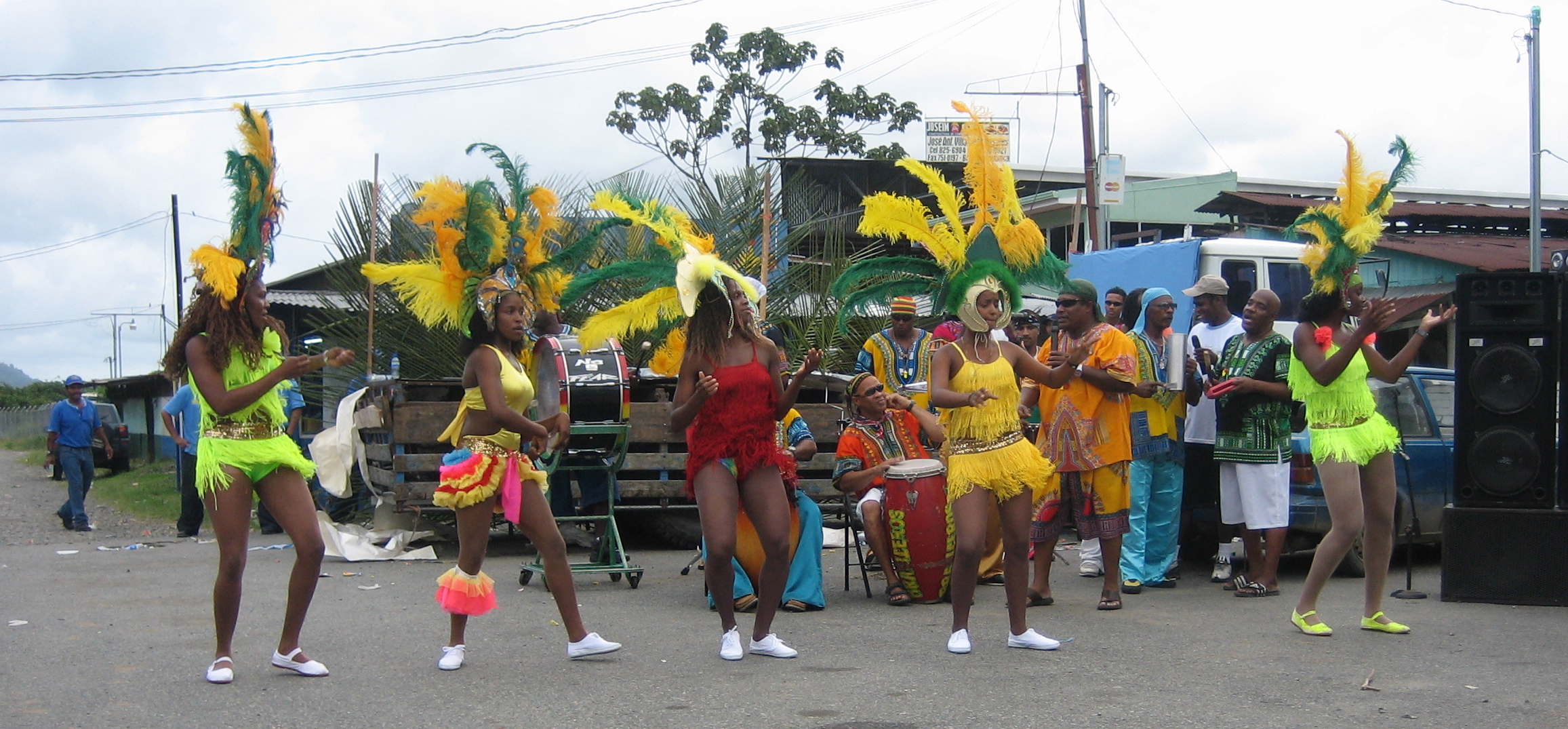
Calypso dancers from Puerto Limón. Photo: MJPRDP, CC BY 3.0, via Wikimedia Commons.
Discover the history, resilience, food, music, language, and traditions of the Afro-descendant communities that helped shape modern Costa Rica
When people imagine Costa Rica, they often picture green mountains, tropical forests, volcanoes, and beaches.
But travel along Costa Rica's Caribbean coast and you will discover another Costa Rica.
A Costa Rica of calypso and reggae.
Of coconut milk and spices.
Of colorful celebrations and elegant traditional clothing.
Of stories passed from generation to generation.
Of English, Spanish, and Creole expressions.
Of cricket, music, dance, and community.
This is the world of Afro-Costa Rican culture.
And while it is particularly visible in the province of Limón, its influence reaches far beyond the Caribbean coast.
It is part of Costa Rica's national identity.
A History That Crosses the Caribbean
From Jamaica to Limón
To understand Afro-Costa Rican culture, we need to travel back to the nineteenth century.
During the construction of Costa Rica's Atlantic Railway, workers were recruited from Jamaica and other parts of the Caribbean.
On December 20, 1872, the ship Lizzie arrived in Puerto Limón from Kingston, Jamaica, carrying 123 contracted workers for the railway project, according to the University of Costa Rica's School of History.
This was only the beginning.
Thousands of Afro-Caribbean workers eventually arrived in Costa Rica to work on the railway and, later, on the banana plantations.
Many remained after the railway construction and established communities along the Caribbean coast.
They brought with them much more than labor.
They brought:
- Languages
- Religion
- Food
- Music
- Stories
- Crafts
- Agricultural knowledge
- Family traditions
- Caribbean customs
Over generations, these traditions became an essential part of Costa Rican culture.
The Railroad Changed Costa Rica
And Afro-Caribbean Communities Helped Build It
The Atlantic Railway was one of the most ambitious infrastructure projects in nineteenth-century Costa Rica.
It connected the Central Valley with the Caribbean coast and eventually transformed the country's economy.
The railway was officially inaugurated in 1890. Its construction, together with the development of the banana industry, played a fundamental role in the growth of Limón, according to Visit Costa Rica.
But there is another side to this story.
The Caribbean region developed for many years with a degree of separation from the rest of Costa Rica, influenced not only by geography but also by political decisions and racial attitudes, as Visit Costa Rica's own Caribbean guide notes.
This history is important.
Afro-Costa Rican culture did not simply appear as a colorful addition to Costa Rican tourism.
It developed through migration, labor, community building, discrimination, resilience, and cultural preservation.
Limón: The Heart of Afro-Costa Rican Culture
If you want to experience Afro-Costa Rican culture, Limón is one of the most important places to visit.
The province's Caribbean identity is unmistakable.
You can hear it in the music.
Taste it in the food.
See it in the architecture.
And feel it in the rhythm of everyday life.
Costa Rica's tourism board describes Limón as a region strongly connected to Afro-Caribbean traditions, with influences visible in its food, music, dance, language, and community life.
But Limón isn't simply "the Afro-Costa Rican region."
It is a multicultural place where Afro-Caribbean, Indigenous, Chinese, European, and other influences have interacted over generations.
That's what makes it so fascinating.
The Language of Limón
Spanish Isn't the Only Language You'll Hear
One of the most fascinating elements of Afro-Costa Rican culture is language.
In Caribbean communities, you may encounter Limonese Creole, also known locally as Mekatelyu or Patuá.
The language is an English-based creole rooted in Jamaican Patois, and it became an important form of communication and cultural identity among Afro-Caribbean communities.
Costa Rica's official tourism materials specifically identify the use of Spanish, English, and Limonese Creole as part of Limón's cultural heritage.
Language carries history.
Every expression can tell a story about migration, family, identity, and connection to the Caribbean.
Calypso: The Sound of Limón
If you want to understand Afro-Costa Rican culture, listen to its music.
One of the most important traditions is calypso limonense.
Calypso originated in Trinidad and Tobago and developed throughout the Caribbean before becoming deeply rooted in communities along Costa Rica's Caribbean coast.
In Limón, calypso became more than entertainment.
It became a way of telling stories.
Musicians could use songs to comment on:
- Everyday life
- Politics
- Relationships
- Community events
- Social problems
- Humor
- History
In other words, music became a form of memory.
The Costa Rican cultural heritage system describes calypso limonense as an expression of the memory and identity of Afro-descendant communities in the Caribbean. Cahuita's Walter Ferguson, often called the king of Costa Rican calypso, remains its most celebrated voice.
Reggae and the Caribbean Sound
Calypso isn't the only music that defines the region.
Reggae also became deeply associated with Costa Rica's Caribbean coast, particularly with communities such as Limón, Cahuita, Puerto Viejo de Talamanca, and surrounding areas.
Walk along the Caribbean coast and you may hear rhythms that feel very different from those of the Central Valley.
That isn't accidental.
The music connects Costa Rica to a much larger Caribbean cultural network.
Jamaica.
Trinidad and Tobago.
Panama.
Nicaragua.
The Caribbean islands.
Africa.
And Central America.
The result is a distinctly Costa Rican Caribbean sound.
The Food of Afro-Costa Rican Culture
Food may be one of the easiest ways for travelers to experience Afro-Costa Rican culture.
But there is an important point:
Afro-Costa Rican cuisine is much more than rice and beans.
Academic research has specifically warned against reducing the culture to only rice and beans, patty, and calypso. Afro-Costa Rican culture is much broader and includes language, religion, music, family traditions, history, and many other cultural expressions.
Still, food is a wonderful place to begin.
Rice and Beans
A Caribbean Classic
If you've tried Costa Rican food in the Central Valley, you may know gallo pinto.
But on the Caribbean coast, rice and beans take on a different personality.
Traditionally, Caribbean-style rice and beans are prepared with coconut milk, giving the dish a distinctive flavor and aroma.
The combination of rice, beans, coconut, herbs, and spices reflects the Caribbean influence on Costa Rican cuisine.
It's one of those dishes that immediately tells you:
You're somewhere different.
Patty
Small Pastry, Big History
A patty is a pastry filled with seasoned meat or other ingredients.
Its roots connect Costa Rica's Caribbean communities with wider British Caribbean culinary traditions.
The crust is often spiced and the filling can vary.
It's perfect as a snack.
But more importantly, it represents how migration transforms food.
A recipe travels.
A family changes it.
A new community adopts it.
And eventually, it becomes part of the identity of a new place.
Pan Bon
A Sweet Caribbean Tradition
Pan bon is another traditional Caribbean-Costa Rican food.
It is a dense, sweet bread associated particularly with Limón and its Afro-Caribbean heritage.
The recipe reflects the influence of British Caribbean baking traditions and has become an important part of local culinary identity.
Try it with coffee.
Better yet, ask someone local about how their family prepares it.
That's when food becomes a story.
Rondón
"Run Down"
Another iconic Caribbean dish is rondón, whose name comes from the English expression "run down."
Traditionally, it is a hearty stew made using ingredients such as coconut milk, seafood or meat, vegetables, and Caribbean seasonings.
Recipes vary from family to family.
And that is exactly what makes traditional cuisine interesting.
There is no single experience.
There are family versions.
Community versions.
Regional versions.
Coconut Is Everywhere
One of the defining features of Caribbean Costa Rican cuisine is the use of coconut.
Coconut milk appears in rice dishes, stews, soups, desserts, and other recipes.
This isn't simply a flavor preference.
It reflects the tropical Caribbean environment and the culinary traditions brought by Afro-Caribbean communities.
Food tells geography.
And in Limón, you can taste the Caribbean.
Carnival and Celebration
When Limón Comes Alive
Celebrations are an important part of Afro-Costa Rican cultural expression.
For decades, Limón has been associated with large public celebrations featuring music, dance, costumes, food, and community participation. The best known is the Limón Carnival, held every October since 1949.
But today, one of the most important cultural celebrations is the Grand Gala Parade.
The event began in 1999 as part of a community effort to strengthen and preserve Limón's cultural identity, according to Costa Rica's Ministry of Culture.
It grew from a desire to represent the richness of Limón beyond the stereotypes associated with carnival, food, and music.
Today, it has become a major cultural expression of Afro-Costa Rican identity.
August Is Afro-Costa Rican Heritage Month
A Month to Remember
Costa Rica officially recognizes August as the Month of the History of African-Descended Peoples.
The recognition was established through Law No. 9526, published in 2018, as Visit Costa Rica explains.
August 31 is also celebrated as the Day of the Black Person and Afro-Costa Rican Culture.
Throughout the month, cultural activities can include:
- Music
- Poetry
- Food
- Exhibitions
- Conferences
- Educational activities
- Dance
- Community events
- Cultural parades
The purpose isn't simply celebration.
It is also recognition.
It is an opportunity to acknowledge the contributions Afro-descendant communities have made to Costa Rican society.
The Grand Gala Parade
A Celebration of Identity
The Grand Gala Parade is one of the most visible expressions of Afro-Costa Rican cultural identity.
Colorful costumes.
Music.
Dance.
Bands.
Community groups.
Families.
And thousands of people filling the streets.
The event was created as a cultural initiative in 1999 and continues to serve as an expression of Limón's Afro-descendant identity. In 2022, it was declared part of Costa Rica's intangible cultural heritage.
If you're fortunate enough to experience it, don't just watch the parade.
Listen to the stories behind it.
The celebration is the result of decades of community work to preserve and represent cultural heritage.
Architecture Tells a Story Too
Walk through historic Limón and look beyond the colorful streets.
The city's architecture also carries the history of its Caribbean communities.
Traditional wooden buildings, raised structures, balconies, ventilation features, and other architectural elements reflect adaptation to the Caribbean climate and connections with the English-speaking Caribbean.
The historic Black Star Line building, once the local headquarters of Marcus Garvey's Universal Negro Improvement Association (UNIA), is one of the cultural landmarks associated with Limón's Afro-Caribbean history. The UCR Caribbean Tourism Observatory highlights the building as part of the city's cultural heritage.
Architecture becomes another form of memory.
Religion and Community
Faith Traveled Across the Caribbean
Afro-Caribbean migrants brought their religious traditions with them.
Protestant denominations, particularly Baptist, Methodist, and Anglican traditions, became important in Caribbean communities.
Churches were not only places of worship.
They also became community spaces.
They provided places for:
- Education
- Social gatherings
- Music
- Mutual support
- Community organization
Religion therefore played an important role in preserving identity across generations.
Education and Community Leadership
Afro-Costa Rican communities contributed not only to agriculture and railway construction but also to education, music, journalism, business, religion, sports, and civic life.
Schools and community organizations became important spaces where cultural traditions could be preserved and passed on.
This is one of the reasons Afro-Costa Rican culture has survived so strongly.
Culture doesn't survive simply because people remember it.
It survives because people teach it.
Cricket in Costa Rica?
Yes!
Here's something that surprises many visitors.
Cricket has a history in Costa Rica's Caribbean communities.
The sport arrived with Afro-Caribbean migrants, particularly from Jamaica, and became part of community life.
While soccer dominates Costa Rican sports culture nationally, cricket remains an interesting example of how migration brought new traditions to the country.
It's a reminder that Costa Rican culture is not limited to the traditions of the Central Valley.
Anancy: Stories That Crossed the Ocean
The Spider Who Traveled From Africa
One of the most fascinating elements of Afro-Caribbean storytelling is the tradition of Anancy (also spelled Anansi), the clever spider character found throughout Caribbean folklore.
Anancy stories have African roots and traveled through the Caribbean with enslaved and later migrant populations.
The stories often involve intelligence, humor, trickery, and survival.
The character became part of Afro-Caribbean oral traditions and remains an important cultural reference.
In Costa Rica, Anancy is part of the heritage associated with Afro-Caribbean communities.
The story itself is powerful.
A character travels across an ocean.
A community carries the stories.
Generations retell them.
And eventually, the story becomes part of the cultural identity of a new country.
Beyond Limón
Afro-Costa Rican Culture Is National Culture
Although Limón is the geographic heart of Afro-Caribbean culture in Costa Rica, Afro-descendant communities and cultural contributions are found throughout the country.
According to Costa Rica's tourism board, around 8% of the country's population is Afro-descendant, with approximately half living in Limón province.
That means Afro-Costa Rican history isn't a regional footnote.
It is part of the national story.
Culture Is More Than Food and Music
This is perhaps the most important thing to understand.
When people hear "Afro-Costa Rican culture," they may immediately think:
Rice and beans.
Patty.
Calypso.
Those are important.
But they are only part of the story.
Afro-Costa Rican culture also includes:
History.
Language.
Religion.
Architecture.
Education.
Family traditions.
Oral storytelling.
Community organization.
Sports.
Art.
Identity.
Resilience.
And the continued preservation of heritage.
As academic research on Afro-Costa Rican culture emphasizes, reducing this heritage to a few foods and musical styles overlooks its much broader historical and cultural dimensions.
How to Experience Afro-Costa Rican Culture Respectfully
Don't Just Visit the Caribbean. Connect With It.
If you want to learn about Afro-Costa Rican culture, don't treat it as something to simply photograph.
Instead:
Eat at locally owned restaurants
Try traditional Caribbean dishes and ask about their origins.
Listen to local musicians
Learn about calypso and its role in preserving history.
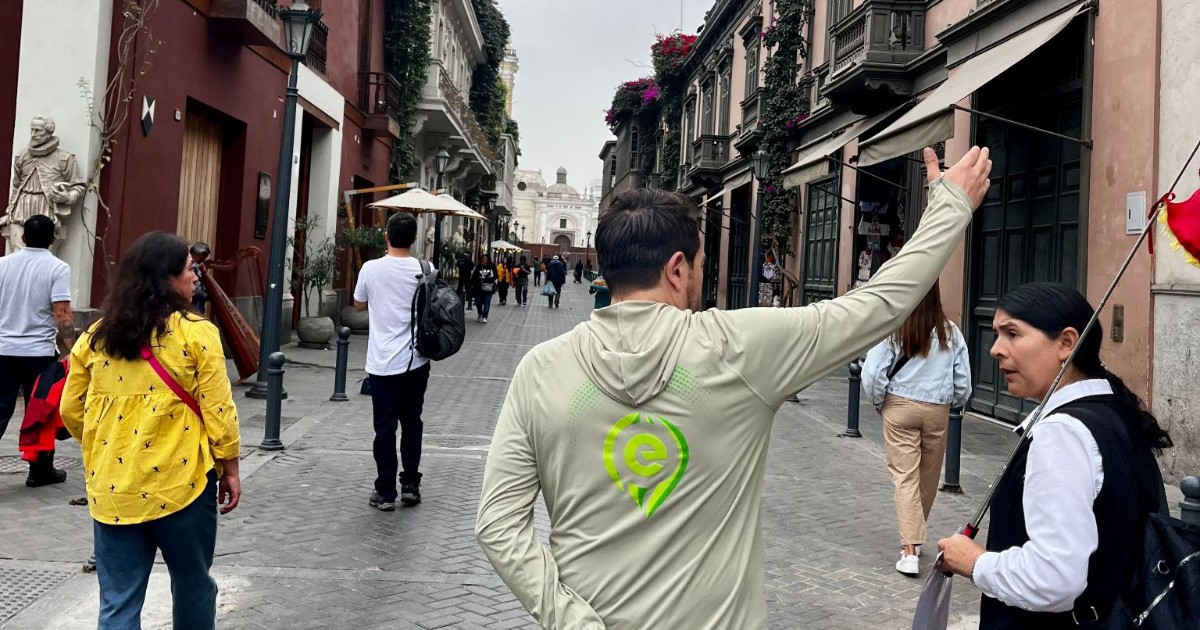
Explore Limón with a local guide
A local perspective can reveal stories you would never discover on your own.
Learn the history
Understanding the railway, migration, banana industry, and racial history gives cultural experiences much greater meaning.
Support community-based tourism
Choose experiences where local communities are directly involved and benefit from tourism.
Ask before photographing people
Especially during cultural ceremonies and community events.
Listen
One of the best ways to learn about a culture is to let people tell you their own stories.
Fun Facts About Afro-Costa Rican Culture
The first major group of Jamaican railway workers arrived in 1872
The ship Lizzie arrived from Kingston on December 20, 1872, carrying 123 contracted workers.
The railway helped create modern Limón
The Atlantic Railway was finally inaugurated in 1890, connecting the Central Valley with the Caribbean coast.
Limón has its own Creole language
Limonese Creole, often called Mekatelyu or Patuá, is an important expression of the province's Afro-Caribbean heritage.
Calypso has roots in Trinidad and Tobago
The musical tradition traveled through the Caribbean and became deeply rooted in Limón.
Cricket came to Costa Rica through Caribbean communities
The sport was introduced through Afro-Caribbean migration and became part of community traditions.
Anancy is a spider with African roots
The clever spider character traveled from West African storytelling traditions through the Caribbean and became part of Afro-Caribbean folklore.
Caribbean rice and beans are different from gallo pinto
Caribbean-style rice and beans are traditionally associated with coconut milk, giving them a distinctive flavor.
The Grand Gala Parade began in 1999
It was created as part of a community effort to strengthen and preserve Limón's cultural identity.
August is officially Afro-descendant History Month
Costa Rica established August as the Month of the History of African-Descended Peoples through Law No. 9526 in 2018.
Afro-Costa Rican culture has influenced the whole country
Its contributions can be found in Costa Rican music, food, language, sports, education, art, and national identity.
A Different Side of Costa Rica
Costa Rica's Caribbean coast is not simply another beautiful destination.
It is a place where history is visible.
Where a railway tells the story of migration.
Where food tells the story of Jamaica and the Caribbean.
Where music preserves memories.
Where language carries identity.
Where architecture reflects adaptation.
And where celebrations bring communities together.
To understand Costa Rica, you need to understand its Caribbean side.
And to understand its Caribbean side, you need to listen to the people who have been telling its stories for generations.
The Rhythm of the Caribbean
Perhaps the best way to describe Afro-Costa Rican culture is through rhythm.
The rhythm of calypso.
The rhythm of Caribbean cooking.
The rhythm of dance.
The rhythm of conversation.
The rhythm of waves against the coast.
The rhythm of a community gathering.
And the rhythm of generations passing traditions forward.
It is a culture shaped by movement.
People crossed oceans.
They built railways.
They planted crops.
They established families.
They created communities.
They faced discrimination.
They preserved their identity.
And they helped shape the Costa Rica we know today.
Come Discover the Caribbean Soul of Costa Rica
A trip to Costa Rica can take you through volcanoes, rainforests, beaches, and mountains.
But if you travel to the Caribbean, you'll discover something different.
You'll hear another rhythm.
Taste different flavors.
Hear different languages.
Learn different stories.
And discover a culture that is deeply Costa Rican while maintaining powerful connections to the wider Caribbean and Africa.
Come listen to the calypso.
Taste the coconut and spices.
Walk through historic Limón.
Learn the stories.
Meet the communities.
And discover one of the most vibrant parts of Costa Rica's identity.
Because Costa Rica's pura vida has many voices.
And one of those voices comes from the Caribbean.
Ready to experience it with your group? Explore our Costa Rica programs with Offbeat Travel.