Pleasures of Ponce, Puerto Rico
I'm sitting at a table in the open air La Terraza restaurant in the Ponce Hilton hotel. The sky is a
cloudless blue, the sun is shining and there's a soft breeze. I'm having breakfast and watching a
black bird raid the sugar, flying off clutching a yellow packet of artificial sweetener in his beak. I
idly wonder what he's going to do with it. He can't possibly be using it for his coffee and there
are other more appropriate nesting materials available. The sparrows seem to be doing fine with
the bark of the palm tree. The parrot (in a cage) has his housing needs met.
This moment is made even more sweet by the fact that back home it's below freezing. But even
if the weather up north was warm, it would still be a golden time to visit Ponce. This smaller
sibling to San Juan has enough amenities to be comfortable but has not yet become a tourism
magnet.
Tiny Mercedita Airport in Ponce was the first sign that this part of Puerto Rico has not yet been discovered. There are just two gates, actually just doors to the tarmac outside, and no food vendors. But then, no one goes to the airport except when the two flights land just before dawn or take off slightly later in the morning. Ponce was officially founded in 1692 by Loiza Ponce de Leon, great grandson of the famous Juan Ponce de Leon first governor of Puerto Rico, and seeker of the fountain of youth (the source of its name and its symbol of the lion). The beautiful heart of Ponce is the historic district.
Visiting Historic Ponce
One of the highlights of a visit to Ponce is the eye-catching red and black striped Parque de
Bombas, or Fire Station. Originally built in 1882 for an Exposition, the Moorish-style building is
painted in the colors of the flag of Ponce. It became the Ponce Fire Station in 1883, and
served proudly until it was renovated and reopened over a hundred years later in 1990 as a
combination museum with a collection of antique fire trucks, and tourism information center.
One of the most visited, loved, and photographed buildings in Ponce, it is also on the National
Register of Historic Places.
Firefighters are a particularly revered group in Ponce, a result of the devastating fires that have regularly swept through the city. But it was the fire on the 25th of January, 1899 known as "el polovorin" that is perhaps the most famous. It started in a military munition depot, located just three blocks from the firehouse yet the firefighters were told not to fight the fire. The reason for the order is not really known but what is certain is that several firemen decided to disobey orders, extinguishing the fire and saving the town. Although they were initially in danger of being punished for insubordination, the people of Ponce considered them heroes and the city government eventually rethought their decision and honored the men in a public celebration. Fast forward to 1906. The firefighters of the city had always been volunteers who did not receive any pay for their service and the municipal government decided to recognized their courage and importance by selecting a firefighter each year to receive a new home. These houses were constructed by the government and the official name of the street where they were built was eventually changed to 25 de enero street "the 25th of January Street" in honor of those firefighters who saved the city in 1899. The houses, which today number about 60, are easily spotted. They're painted in the distinctive red and black colors of Ponce.
After enjoying the plaza stroll east on Isabel Street admiring more beautiful buildings, and visiting the Museo de la Historia de Ponce (Museum of the History of Ponce), and the Museo de la Musica Puertorriquena (Museum of Puerto Rican Music) housed in heritage buildings. City Hall, dating back to 1847 when it served as a jail and, Casa Armstrong-Poventud (currently closed for renovation) are both magnificent classics. At the edge of historic Ponce is the Tercentenary Park Plaza, built in 1992 for the 300th anniversary of the founding of the city, and the Bridge of Lions. The plaza was constructed with commemorative plates and plaques for famous native sons and daughters from actors to governors. And the lions are, of course, the emblem of Ponce.
Outside of DowntownThe pleasures of Ponce extend beyond the historic district and include some of Puerto Rico's most engaging attractions.
Because all the paintings are originals, there are many that visitors have never seen, including the complex and fascinating El Diluvio Universal by Leandro Bassare ca 1700 who depicted the biblical flood story but placed it in Venice. We produced a nonstop stream of questions which delighted our knowledgeable guide who tailors the tour to the interests of the group. An expansion of the museum is planned to allow them to display currently unavailable works as well as provide an amphitheater for concerts.
Centro Ceremonial Indigena de Tibes -- Tibes Ceremonial Center The site appears to go back to 300 AD and was discovered in 1975 after a hurricane exposed some ancient pottery, shells and bones. Almost 200 skeletons have been found so far in the ancient cemetery. The guided tours, available in English, provide the narrative describing the inhabitants' lives. In addition, a recreated dwelling allows visitors to walk through a construction.
Castillo Serralles If you want a great view but don't feel like a long drive up into the mountains, walk over to El Vigia Hill. This must be one of the world's most unusual observation towers. The 100-foot tall cross, La Cruceta del Vigia, stands 300 feet above sea level. Originally a simple but large wooden cross, it was rebuilt in concrete to honor Don Luis, a security guard for the wooden cross for 30 years. The folks of Ponce decided to make it sturdy enough so that people could go up to the top to enjoy the view. There's also a Japanese Garden open to visitors.
La Guancha
Day TripsCaja de Muerto (Coffin Island)
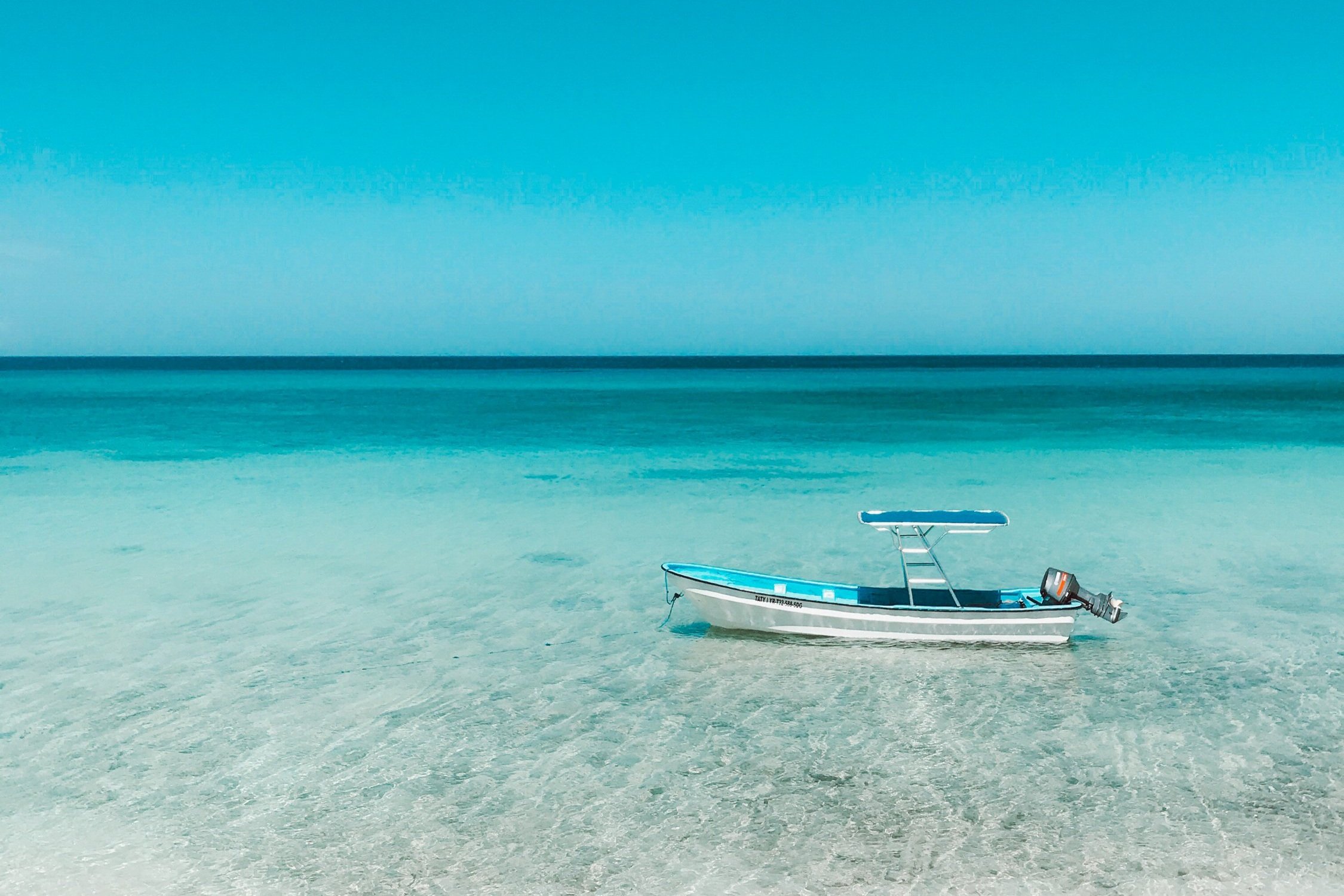
Coffin Island has pleasures that belie its unfortunate name. Its empty beaches are
bordered by turquoise blue waters and there are serpentine rocks perfect for picking piled up on
the shore. There's also a somewhat challenging but rewarding hiking trail to the top of the
mountain offering a lovely view of the island, and an old Spanish Colonial lighthouse dating
back to 1887.
The island is uninhabited except for a small outpost of park rangers. There are some picnic tables and primitive toilets. But no water. Whatever you need, you must bring with you, and that should include sturdy shoes for hiking and exploring. Even if you don't feel up to the walk, the beach and the water offered more than enough pleasures including the search for perfect stones and lovely beach debris. The water was turquoise blue gorgeous and calm and we bobbed up and down in the gentle surf like contented ducks. There are several ways to get to the island. We used Acampa tours which arranged for a catamaran, food, and a guided hike. Ray Sepulveda and his staff are experts both in hiking, ecology, and nature. They also guided the more intrepid members of the group to small limestone caves. You can also make arrangements in advance with Island Venture for a day trip to the island.
One trail that went up to the observation tower at the top of the highest peak was rocky and steep and I opted to stop halfway up, but there were still lovely peek-a-boo views and special moments. The clicking and whispers of a stand of bamboo trees. A mile marker from the original road, and small waterfalls. I was told that there's actually a paved road that leads to the observatory. Ask at the ranger station at the entrance to the reserve. The reserve is actually composed of protected regions mixed inbetween agricultural areas and small communities. The public roads can take you past waterfalls, tiny towns, and houses on stilts, carved into the mountain side. For people who want to experience some of the beauty but without the hiking, this works as an alternative. Although there is no food available in the park you can pick up a delicious local specialties in in the roadside restaurants near the entrances. Our tour was again through Acampa and Ray Sepulveda and it was again excellently organized with a prepared lunch including wonderful Puerto Rican specialties (and my favorite) fabulous rice and beans and barbequed pork. Although San Juan gets most of the tourist attention, find some time to explore Ponce. Laid-back and uncrowded, Ponce offers a chance to experience more of Puerto Rico's nature and charm.
For more information on Puerto Rico (and Ponce) visit GoToPuertoRico.com and LetsGoToPonce.com. Read more about Puerto Rico © 2006
|